The Company We Keep

“We shall be known by the company we keep
By the ones who circle round to tend these fires.
We shall be known by the ones who sow and reap
The seeds of change alive from deep within the earth.”

–MaMuse

At a small Christmas concert I attended in December, the lead soprano faltered for a moment during her solo. After a few suspended beats, the rest of the sopranos swooped in to sing her part until she could steady herself and continue. It was barely noticeable.

__________

During my church’s Christmas Eve service, we lit candles, passing tiny flames one to the other until the sanctuary was filled. I’ve always appreciated this ritual for how it spreads so much light from one small flame, but a friend said they saw it more as a reminder that if your flame goes out, there are many others there to keep lighting your way.

__________

In his poem, “Love Poems to Our Friends,” Joseph Fasano asks, “Where are the poems for those who know us?/Not for star-crossed loves,/for agonies of longing,/but ones who go with us/the whole road./…the ones who stand/by our shoulder at the funeral/and lead us back to the land of the living/and put our favorite record on the player/and go away, and come back,/always come back,/with bread and wine/and one word, one word: stay.” 

__________

When I was in a bad way this spring and hospitalized for a several days, two friends came to visit me. One was wearing a riotous, happy blouse with a flower print and they both brought such alive, vibrant energy to a confined, bleak environment. When I told her how much I loved her shirt, she said, “It’s my way of bringing you flowers since I couldn’t bring the real thing.”

__________

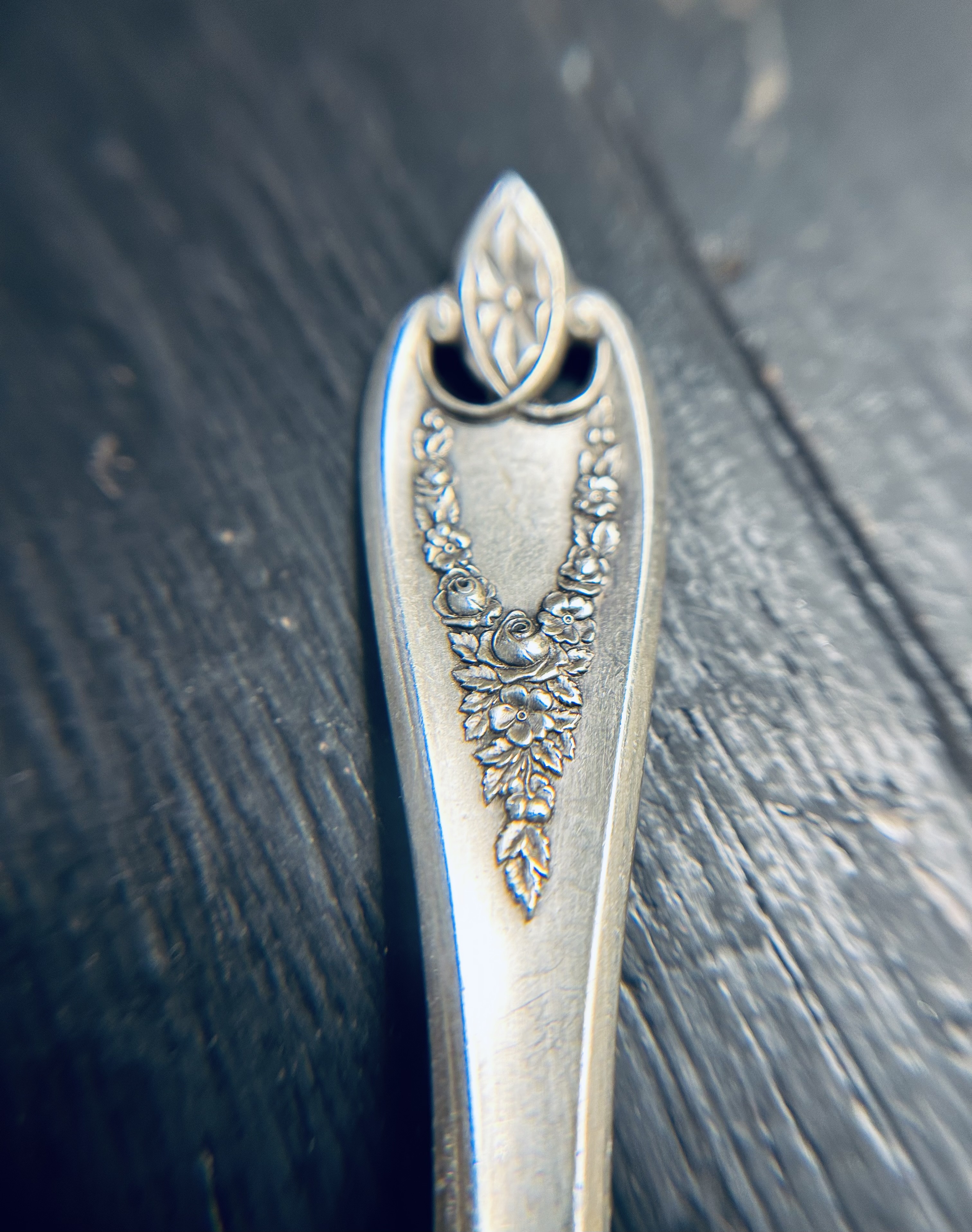
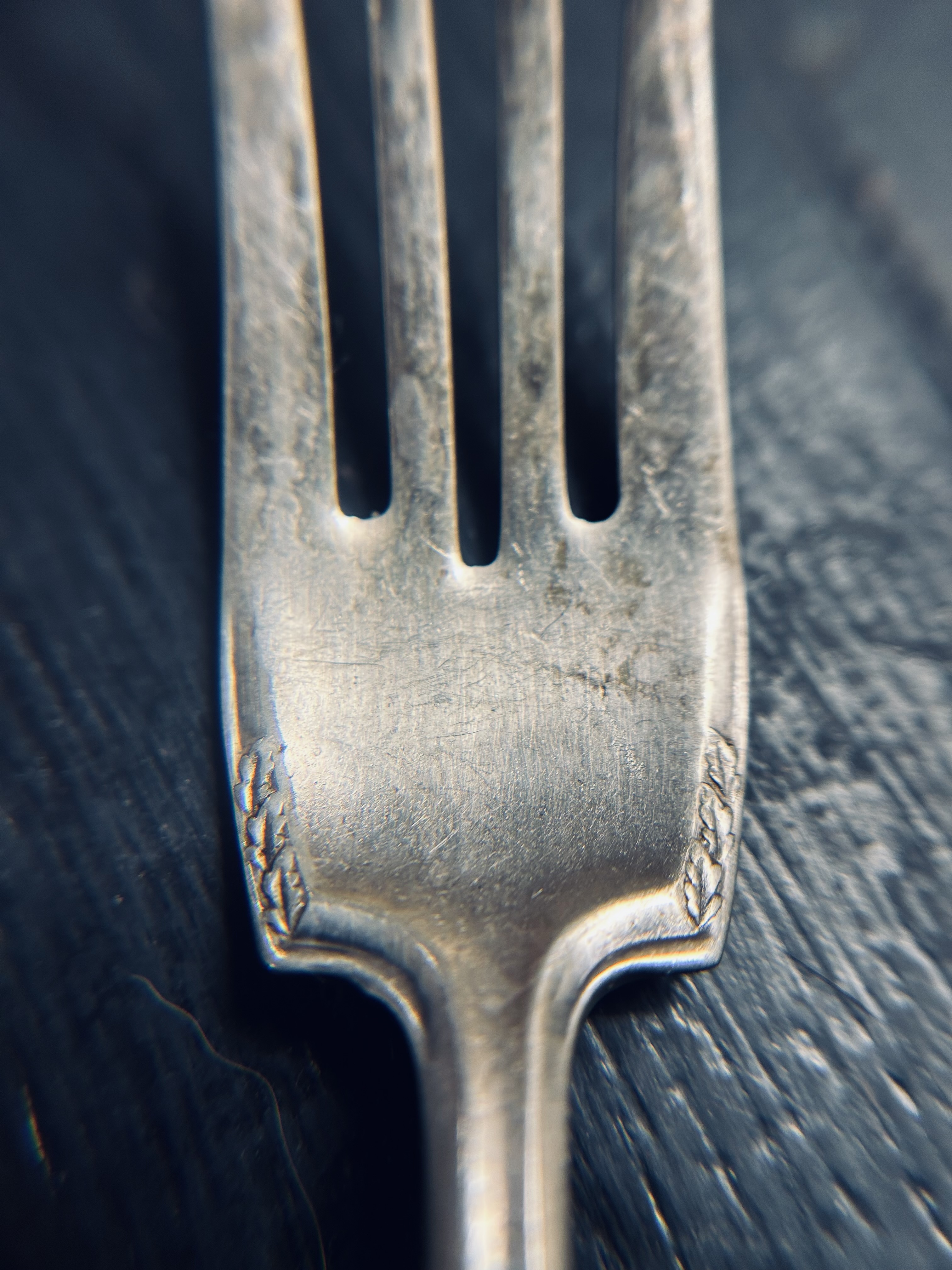
A beautiful friend gave me a set of antique silverware when I moved into my apartment in April. It’s so intricate and detailed with tiny flowers and minute scrolls, and the pieces feel so good to hold. It means that each time I do the tedious task of washing dishes, I’m reminded that I am loved.
__________

I’ve been working for a while now on a writing project that explores the Catholic “Acts of Mercy” in what I hope is a new way. In Catholicism, the Acts of Mercy are charitable acts for helping people in need. I’ve been semi obsessed with them for about fifteen years. There are seven corporal acts of mercy and they are things like, “feeding the hungry, caring for the sick, and sheltering the homeless.” And then there are the seven spiritual acts of mercy which are things like, “counseling the doubtful, instructing the ignorant, and bearing wrongs patiently.” Acts or works of mercy are all about doing good, being good.

My reimagining of the acts of mercy is that opportunities to extend mercy are actually reciprocal experiences; that it is not enough to value ourselves by what we “give” to or “do” for others. Doing good is not an us/them dynamic; it is not about better/worse, healthy/sick, whole/broken. That receiving, although it feels uncomfortable sometimes, honors the giver, and opens us to our shared humanity, our shared brokenness. And our shared longings for wholeness.

In the end, we are all trying to get back into the garden. To get back to paradise. To return to the experience of union with whatever Divine Source makes us feel sheltered, loved, held. There are acts of mercy every day. We are all always giving and always receiving.

Welcome to, “The Mercy Journals.” A project fifteen years in the making.
Love Poems to Our Friends
by Jospeh Fasano

Where are the poems for those who know us?

Not for star-crossed loves,
for agonies of longing,
but words for those who go with us
the whole road.

How would they start, I wonder
You let me crash
when I was new to ruin.
You came to me   
though visiting hours were over.
You held me when my loves
were done, were flames.

Yes, we will lose a few
in the changes.
But these are the ones
who save us:
not the charmers,
not the comets of wild passion,
not the ups-and-downs of love’s unlucky hungers,

but the ones who stand
by our shoulder at the funeral
and lead us back to the land of the living
and put our favorite record on the player
and go away, and come back,
always come back,

with bread and wine
and one word, one word: stay

To learn more about Joseph Fasano, click here.

To hear the delightful band MaMuse sing, “We Shall Be Known,” click here.
Tiny Holidays Week 3


If you think you’ve seen it all
Stick around…
There’s a lot we’ve lost
But so much more we’ve found

If you think you got it all
You got it wrong…
There’s more in store
The best is yet to come

Let us boldly go
Where only those with open hearts can go
Where words aren’t spoken
And time is golden
And love’s blindfolding us with hope

And we stay honest and keep our promises
Keep evolving
Keeping on this
All we have to do is hold on
And love will do the rest
All we have to do is hold on
And take another breath

If you think you heard it all
I’ll say it again…
My love for you will never ever end

If you think you’ve seen it all
Stick around
We’re just getting started…


–“If You Think You’ve Seen It All,” Jason Mraz
 
A few years ago, my Dad came home from the Post Office with a book of stamps and he said, very matter-of-factly, “I’ll be dead before I can use all of these.” Whenever he made comments like, “Never get old, Lee,” I’d reply, “It’s better than the alternative,” which was a knee-jerk way of covering my discomfort with a process I couldn’t really appreciate—aging and its attendant bittersweetness.

Now that he’s gone, the time ahead of me feels finite in a way that it hadn’t until now. It’s not a broad vista anymore; it’s more like a path in a forest whose limits I can sense in the distance. There have even been times, mostly at 4:00 in the morning, when I’ve thought that maybe I’ve done everything I’m going to do—I had a relatively long marriage, gave birth to and raised three beautiful children, had an almost 30-year career, and walked through sacred days with my Dad at the end of his life. Maybe there’s no “best” yet to come because I’ve gotten my share of good things.

And then there’s the inevitability of physical limitations whether in the form of aging or illness. I mean, something is going to happen; the body always wins.

I’ve been listening to this song by Jason Mraz, “If You Think You’ve Seen It All,” which I first heard during a break in my first weekend of seminary classes. It’s a lovely mindset to have at the beginning of a journey like the seminary program, and I imagine the voice singing, “If you think you heard it all, I’ll say it again…My love for you will never ever end,” as that of Divine Spirit calling us forward on a journey that already feels transformative.

But when I hear the line, “the best is yet to come,” I think, “Is it?”

If we buy into the idea of “the best” of anything, the opposite must also be true: “the worst” is also yet to come. More loss, more decline, more heartbreak…these are all inevitable.

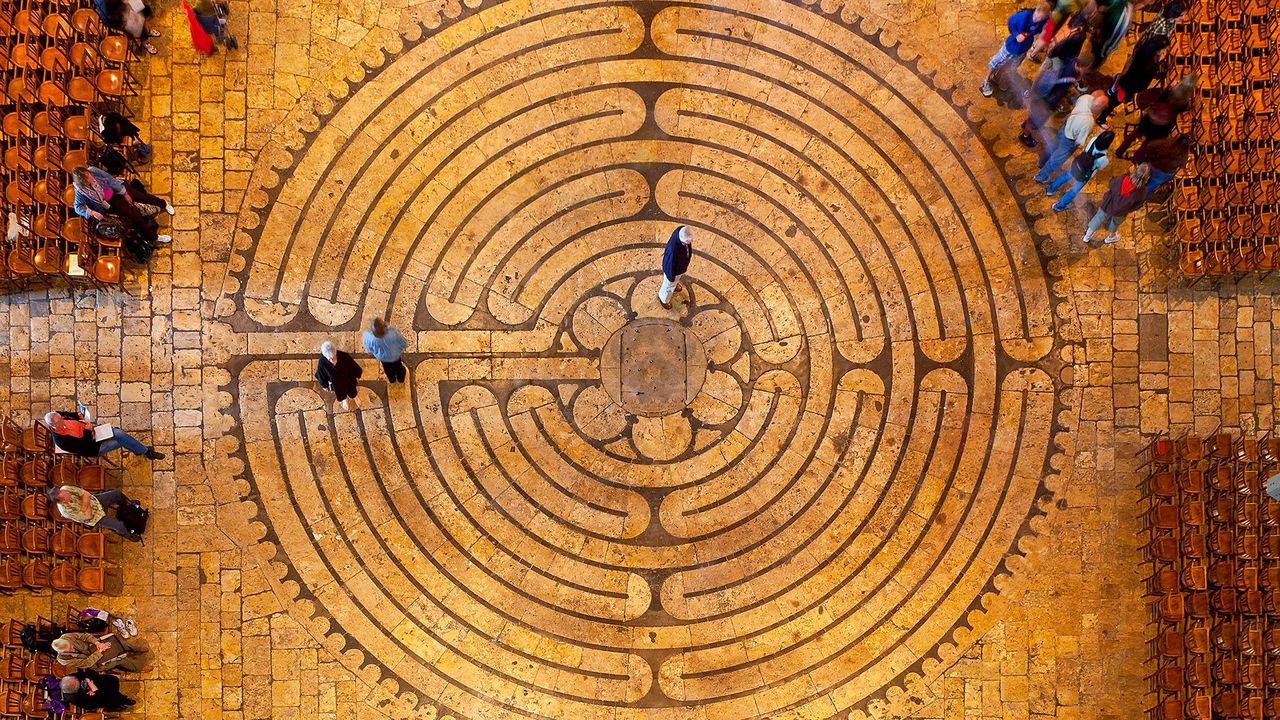
In the end, though, the idea of a “best” or “worst” anything seems unhelpful. It’s too linear and draws attention away from the often mediocre but very palpable present. Like a chambered nautilus or a labyrinth, we move in repeating spirals, returning to experiences but in new and expanded ways that hopefully help us learn more with each go around.

In “Falling Upward: A Spirituality for the Two Halves of Life,” Richard Rohr expresses a very Tiny Holidays-coded sentiment: “Your concern is not so much to have what you love anymore, but to love what you have—right now. This is a monumental change from the first half of life, so much so that it is almost a litmus test of whether you are in the second half at all.” 

Instead of seeing the richness of our lives as fading or dwindling, the finiteness of the present can be felt as more colorful, more immediate, and full of impact. Love it then let it go.

In the last scene of “Somebody, Somewhere,” the show Rolling Stone just called the best show of 2024, Bridget Everett (an incredible actor, writer, and cabaret performer) sings “The Climb” by Miley Cyrus in a dumpy Midwest town bar, in front of the family and friends she has grown into love with over the three seasons of the show. She’s such an open, powerful singer and the scene is so heartwarming as are so many others throughout the three seasons (seriously, you should watch this show).

Nothing “big” or “best” happens in this show; it’s the tiny forward movement of the characters and their hearts that draws you in. “The Climb” is the perfect song for this moment because there’s nothing super special about it–it’s a nice twangy pop ballad which, in Bridget’s hands becomes goofy and heartfelt. It’s a tiny celebration of the fact that while there is no best or worst, there is always more to come. And it’s a good idea to keep a steady, hopeful pace as we walk into it.

There’s always gonna be another mountain
I’m always gonna wanna make it move
Always gonna be an uphill battle
Sometimes I’m gonna have to lose
Ain’t about how fast I get there
Ain’t about what’s waiting on the other side
It’s the climb

Keep on moving, keep climbing
Keep the faith, baby
It’s all about, it’s all about the climb
Keep your faith, keep your faith

God Is a Street Fighter. With Sharp Elbows.

Poetry, like God, does not dwell in the periphery of life. And like God, poetry is “a street-fighter, with sharp elbows” (David Whyte). Both poetry and a relationship with something greater than yourself demand awareness. And awareness is essential to staying alive.

90WoundednessSo when I ask, “When was God present in your life today?” it is an unsentimental question. I am asking you when you felt the shared woundedness of being alive and the rawness of connection, without which, we don’t have a chance.

Was it when you got into a cab, and the driver, a woman you know, said, “I apologize for being late. I lost my son. I mean, he died. I mean, he was shot and killed. Two weeks ago. And I just, you know, can’t wrap it around my head yet. So just bear with me.” Was it then, when you prayed for something–anything–to come in and fill the space around such a precious, agonizing, searing expression of human experience?

Was it in the persistent kindness of a friend, someone whose insistence on reaching you finally made it through your self-absorption and woke you up, again, to the awareness that our most disastrous fuck-ups and heartbreaking struggles are also the openings that allow us to be on the receiving end of extraordinary kindness?

Was it when you confessed some huge, complicated, emotionally overblown nonsense that had taken up residence in your head, and the friend who was listening looked directly at you and said, “Girl, that is some sick-ass shit you’re doing to yourself. Just stop it.”

wounded heart

When did God show up and make it possible for you to stay here, right here, today, awake and aware? And where do you need help with this? Is it in the phone call to a sick friend you’re afraid to make? Is it in all the small things that, when combined, make your state of mind become a state of mindlessness?

Ask for help. Ask for courage. Ask boldly, as a “child of the king.” Help comes, breathing space into the impossibly tight corners, the frozen lungs. And in your own inhaling and exhaling, you will help someone else remember to breathe.

Enough

Enough. These few words are enough.
If not these words, this breath.
If not this breath, this sitting here.

This opening to the life/
We have refused
Again and again
Until now.

Until now.

by David Whtye

Blog at WordPress.com.

Up ↑