For Love

57

For you I’d do
    the whole thing through
below, above
    for now, for love.

J.H. Prynne

My Dad died around 5:00 on a Tuesday evening in February. Later that night, after the phone calls, the funeral home people, the stunned and exhausted goodbyes, I was sitting on my bed looking out into the February dark. A wave of the most beautiful golden light swept through the room and through my body. I watched it move from right to left, gold and tangible, filling me with such palpable joy I was almost giddy. I felt my Dad telling me that he had made it across (he had been worried about the Catholic holding area called purgatory). He had made it over and was on the way to a new, joy-filled journey; I could almost feel him laughing.

The next morning was a bleak winter day. When I woke up, he was gone. All the things that made up our daily lives—the feeding tube supplies, the medical equipment, the pill bottles—sat uselessly on the kitchen counter and in his bedroom. I felt equally useless, wandering through the house thinking, “He died. He died.” As if the process I’d just witnessed over the last several days, hour after sacred hour, hadn’t happened. As if there was the possibility of a different outcome when we learned that his cancer had metastasized. He was the North Star not only of our family in general, but also of my Mom’s and my daily lives. When he was out, we were waiting for him to come home. And now he was gone. The light in the house was never the same.

One of the hardest parts about losing him is that the version of me that he saw and loved is gone. He could be critical and judgmental at times, but on the whole, he was so loving and so supportive. He cared about my life, my kids, my work. He believed that I had value and that I would, despite struggles, know how to do the right thing. I never doubted that I was important to him. It’s been so hard to lose that.

Now, as we creep up to the one-year “anniversary” of his passing, I am engaged in magical thinking. Maybe a year is long enough for him to be dead; maybe it’s time for him to come back. Maybe he’ll find a way to let us know that he’s okay; that he’s happy about how we’ve handled things. Maybe things get significantly easier after the first year and on day 366, I’ll wake up and be happy again.

One of the Catholic Acts of Spiritual Mercy is to “comfort the sorrowful.” My Dad made it so easy to care for him in those last hard months. He was quietly accepting of the physical interventions that he needed. He was, in fact, all through those last heartbreaking months, teaching us how to die. It was he who was doing the comforting. We were and are the sorrowful ones, but he would hate that. Knowing that he’d want us to carry on living our good and fortunate lives makes it a little bit easier to do that.

He is still comforting and teaching us. But oh, how we miss him.

This Coldplay song, “All My Love,” and the video with Dick Van Dyke at age 99 are so heartwarming. I think you’ll love it.


Tiny Holidays: A Throwback

I wrote this in 2009 in lieu of the standard “Holiday Letter.” So much has changed, but I still love this story and that this even happened at all.

Christmas pic

Having neither spectacular accomplishments nor grave misfortunes to report, and, to be honest, having exhausted the vein of humorous family anecdotes over the years, I will tell you instead that we are all well and fine, and hope that you are too.

Instead of Srajek family details, which are really much the same as any other family’s day-to-day lives, I offer this story about something that happened to us this time last year, at the start of a long Midwest winter.

In our local paper there used to be a kid’s feature called “Letters to the Editor,” where school kids responded to a question from the editor, and then some responses from each school got published.  One week last December, Jacob’s answer to the question “What is the top item on your Christmas list this year?” turned up in the paper.  He wrote that since he wanted to be a carpenter when he grew up, he had “always wanted” a carpenter’s plane.

If he didn’t get that, the number two thing on the list was “lots of nice building wood,” a response that makes him sound quainter and less electronically minded than he really is, but, well, he was probably writing what he knew had the best chance of getting published (they’re never too young to play to the crowd).

About a week after his response appeared in the paper, we received a letter in the mail from a woman we did not know. She apologized if we were not the parents of Jacob Srajek, said that she had looked us up in the phone book, and she hoped her writing was not an imposition to us.  A clipping of Jacob’s letter was neatly taped to the corner of her own letter, which was printed on paper with a decorative floral border.
Continue reading “Tiny Holidays: A Throwback”

Tiny Holidays Week 3


If you think you’ve seen it all
Stick around…
There’s a lot we’ve lost
But so much more we’ve found

If you think you got it all
You got it wrong…
There’s more in store
The best is yet to come

Let us boldly go
Where only those with open hearts can go
Where words aren’t spoken
And time is golden
And love’s blindfolding us with hope

And we stay honest and keep our promises
Keep evolving
Keeping on this
All we have to do is hold on
And love will do the rest
All we have to do is hold on
And take another breath

If you think you heard it all
I’ll say it again…
My love for you will never ever end

If you think you’ve seen it all
Stick around
We’re just getting started…


–“If You Think You’ve Seen It All,” Jason Mraz
 
A few years ago, my Dad came home from the Post Office with a book of stamps and he said, very matter-of-factly, “I’ll be dead before I can use all of these.” Whenever he made comments like, “Never get old, Lee,” I’d reply, “It’s better than the alternative,” which was a knee-jerk way of covering my discomfort with a process I couldn’t really appreciate—aging and its attendant bittersweetness.

Now that he’s gone, the time ahead of me feels finite in a way that it hadn’t until now. It’s not a broad vista anymore; it’s more like a path in a forest whose limits I can sense in the distance. There have even been times, mostly at 4:00 in the morning, when I’ve thought that maybe I’ve done everything I’m going to do—I had a relatively long marriage, gave birth to and raised three beautiful children, had an almost 30-year career, and walked through sacred days with my Dad at the end of his life. Maybe there’s no “best” yet to come because I’ve gotten my share of good things.

And then there’s the inevitability of physical limitations whether in the form of aging or illness. I mean, something is going to happen; the body always wins.

I’ve been listening to this song by Jason Mraz, “If You Think You’ve Seen It All,” which I first heard during a break in my first weekend of seminary classes. It’s a lovely mindset to have at the beginning of a journey like the seminary program, and I imagine the voice singing, “If you think you heard it all, I’ll say it again…My love for you will never ever end,” as that of Divine Spirit calling us forward on a journey that already feels transformative.

But when I hear the line, “the best is yet to come,” I think, “Is it?”

If we buy into the idea of “the best” of anything, the opposite must also be true: “the worst” is also yet to come. More loss, more decline, more heartbreak…these are all inevitable.

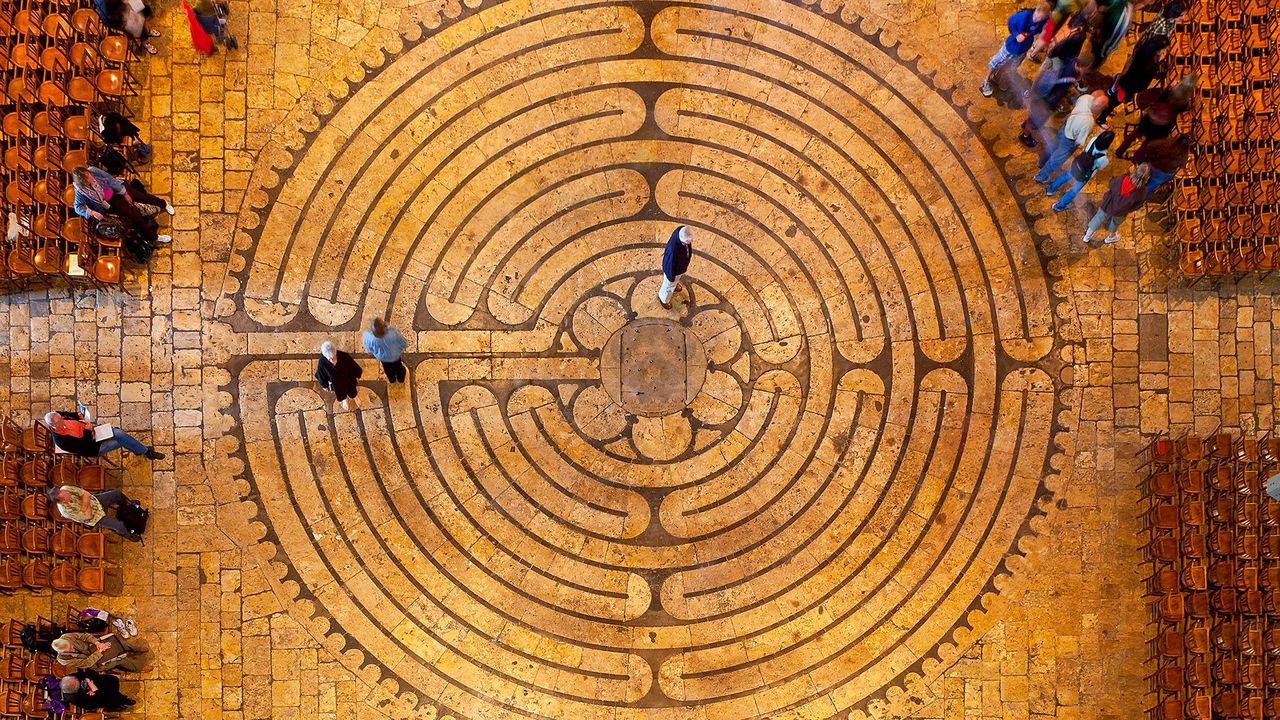
In the end, though, the idea of a “best” or “worst” anything seems unhelpful. It’s too linear and draws attention away from the often mediocre but very palpable present. Like a chambered nautilus or a labyrinth, we move in repeating spirals, returning to experiences but in new and expanded ways that hopefully help us learn more with each go around.

In “Falling Upward: A Spirituality for the Two Halves of Life,” Richard Rohr expresses a very Tiny Holidays-coded sentiment: “Your concern is not so much to have what you love anymore, but to love what you have—right now. This is a monumental change from the first half of life, so much so that it is almost a litmus test of whether you are in the second half at all.” 

Instead of seeing the richness of our lives as fading or dwindling, the finiteness of the present can be felt as more colorful, more immediate, and full of impact. Love it then let it go.

In the last scene of “Somebody, Somewhere,” the show Rolling Stone just called the best show of 2024, Bridget Everett (an incredible actor, writer, and cabaret performer) sings “The Climb” by Miley Cyrus in a dumpy Midwest town bar, in front of the family and friends she has grown into love with over the three seasons of the show. She’s such an open, powerful singer and the scene is so heartwarming as are so many others throughout the three seasons (seriously, you should watch this show).

Nothing “big” or “best” happens in this show; it’s the tiny forward movement of the characters and their hearts that draws you in. “The Climb” is the perfect song for this moment because there’s nothing super special about it–it’s a nice twangy pop ballad which, in Bridget’s hands becomes goofy and heartfelt. It’s a tiny celebration of the fact that while there is no best or worst, there is always more to come. And it’s a good idea to keep a steady, hopeful pace as we walk into it.

There’s always gonna be another mountain
I’m always gonna wanna make it move
Always gonna be an uphill battle
Sometimes I’m gonna have to lose
Ain’t about how fast I get there
Ain’t about what’s waiting on the other side
It’s the climb

Keep on moving, keep climbing
Keep the faith, baby
It’s all about, it’s all about the climb
Keep your faith, keep your faith

a heart-felt holiday

I wrote this in 2009 in lieu of the standard “Holiday Letter.” So much has changed, but I still really love this story.

Having neither spectacular accomplishments nor grave misfortunes to report, and, to be honest, having exhausted the vein of humorous family anecdotes over the years, I will tell you instead that we are all well and fine, and hope that you are too.

Instead of Srajek family details, which are really much the same as any other family’s day-to-day lives, I offer this story about something that happened to us this time last year, at the start of a long Midwest winter.

In our local paper there used to be a kid’s feature called “Letters to the Editor,” where school kids responded to a question from the editor, and then some responses from each school got published.  One week last December, Jacob’s answer to the question “What is the top item on your Christmas list this year?” turned up in the paper.  He wrote that since he wanted to be a carpenter when he grew up, he had “always wanted” a carpenter’s plane.

If he didn’t get that, the number two thing on the list was “lots of nice building wood,” a response that makes him sound quainter and less electronically minded than he really is, but, well, he was probably writing what he knew had the best chance of getting published (they’re never too young to play to the crowd).

About a week after his response appeared in the paper, we received a letter in the mail from a woman we did not know. She apologized if we were not the parents of Jacob Srajek, said that she had looked us up in the phone book, and she hoped her writing was not an imposition to us.  A clipping of Jacob’s letter was neatly taped to the corner of her own letter, which was printed on paper with a decorative floral border.
Continue reading “a heart-felt holiday”

“Blest be the God of love”*

The three best things that happened to me yesterday happened before 6:30am: 1) a line in a poem that wouldn’t come right seemed like it would; 2) I thought of a way to return to a writing project that I keep abandoning; and 3) my 4-year old son walked into the kitchen in his penguin pajamas with his armload of sleeping paraphenalia and said, “Hello there, my friend.”

Continue reading ““Blest be the God of love”*”

Things That Carry Us

Very few people believe this, but I love riding the bus. Since I lost my license last April, I have become the world’s biggest fan of my community’s public transportation system, which really is pretty fantastic. But we are such a car-dependent society that unless you live in a large city, it’s hard to imagine existing easily without a vehicle.

Here, though, it works. It’s affordable, convenient, and it expands my world view. I meet new people all the time, eavesdrop shamelessly on private conversations, see things that I would never otherwise see from the confines of my own private vehicle. It’s a writer’s paradise.

ugly bus stop with mailbox in the background
lame picture of ugly bus stop with unidentifiable mailbox in the background

Last week, I was sitting at this gray, sort of depressing bus stop at the edge of a run down shopping area, willing my fingers not to become frostbitten, and I noticed a public mailbox in the middle of the parking lot. I was surprised to see it there because there seem to be fewer public mailboxes around these days.

Anyway, a few minutes passed, and this little old couple in a little old car pulled slowly up to the mailbox. The little old man rolled down the window about two inches and sort of scrunched this letter out through the window into the mailbox, rolled the window back up, and then very slowly drove away. A few more minutes passed, and a mail truck pulled up to empty the mailbox, and I thought how lovely that was–that the old man’s letter would be picked up and carried on along its way. Just like the bus I was waiting for would pick me up and carry me home.

Tiny_Beautiful-330Just like the book I’m reading, Tiny Beautiful Things: Advice on Love and Life from Dear Sugar by Cheryl Strayed is carrying along my thoughts and feelings about love. Moving me forward, making me feel less alone, the way the best writing always does. The book is about many things, but I’m finding the pieces about love to be particularly moving.

For example, in response to one reader (Johnny’s) question about his ambivalence about when it’s right to say “I love you” to the woman he’s dating, and his plaintive query,”What is this love thing all about?”, she writes: “You aren’t afraid of love. You’re afraid of all the junk you’ve yoked to love…Do you realize that your refusal to utter the word ‘love’ to your lover has created a force field all its own? Withholding distorts reality. It makes the people who do the withholding ugly and small-hearted. It makes the people from whom things are withheld crazy and desperate and incapable of knowing what they actually feel…Don’t be strategic or coy. Strategic and coy are for jackasses. Be brave. Be authentic. Practice saying the word ‘love’ to all the people you love so when it matters the most to say it, you will. We’re all going to die, Johnny. Hit the iron bell like it’s dinnertime” (Strayed, pp. 16-18).

My favorite man in the world called me last night to tell me that he loved me, and he sent me an email this morning, one of those chain ones that I usually hate that said “I wish you enough.” I sat in my office and started to cry. My second favorite man always tells me that he loves me when we say goodbye on the phone. It wasn’t always this way, but when things were hard in our family over the past few years, it started to become the thing we said to each other, to carry us along, and now we always say it because it’s true, and it’s the bridge that keeps us connected until the next conversation. I love you. I love you, too.

The poem for today is by David Whyte, whom I had in mind because I remember hearing him speak about the difference between hiking and kayaking. He said how struck he was by the difference in being carried by the water in a kayak, how you could carry so much more with you because you yourself were being carried along by this elemental force instead of being weighed down by everything you needed to carry on your back.

I’m pretty sure it’s like that with love.

What carries you? What helps you keep your head above water, or buoys you along when you need a little extra support? What connects you? I’d love it if you’d share (leave a comment), and so will others who stop by to read! [One last thing, and apologies for being self-promoting, but if you enjoy reading this blog, do feel free to share with others, via email, Facebook, Twitter, etc.]

Loaves and Fishes

This is not the age of information.
This is not
the age of information.

Forget the news,
and the radio,
and the blurred screen.

This is the time of loaves
and fishes.

People are hungry,
and one good word is bread
for a thousand.

–David Whyte

loaves-and-fishes1

Your Life as a Pie Chart

At the beginning of this year, I had to attend one of those perennially unhelpful workshops on work/life balance.  I strongly despise the whole concept of work/life balance, partly because it implies that your work is not your life and your life is not your work, and partly because balance is a static position that doesn’t last.  (For more useful ways of looking at this issue, see David Whyte’s The Three Marriages.)

Continue reading “Your Life as a Pie Chart”

Better Late Than Never: Advent Blog 2011

The 2nd Sunday of Advent has come and gone, the amaryllis’ that I wanted to plant by December 1st are still in their boxes, and last night we just didn’t have the energy to decorate the tree that Martin put up in the morning.  But! This morning in the shower, I decided that it was not too late to do another Advent blog.  I’ll explain how this came to be in a moment, but know that I’ll be doing my very best to post every day until Christmas, and I would love it, as always, if you were here.

not the amaryllis in my house

Continue reading “Better Late Than Never: Advent Blog 2011”

Please Stop Calling the Royal Wedding a “Fairy Tale”

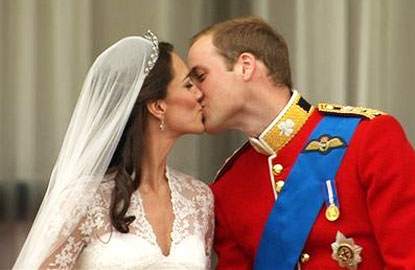
Like the wedding of Charles and Diana, William and Catherine’s wedding has been referred to, over and over again, as a “fairy tale.”  Most of us are guilty of using commonly repeated words or phrases, such as “fairy tale,” without really thinking about what they mean.  But just a short mental reconnaissance through our beloved childhood “fairy tales” reminds us that every story from this genre features a scary villain:  the sharp-toothed wolf dressed as the trusted grandmother; the evil stepmother with the blood-red nails; the bitter old crone whose poison needle puts the beautiful princess to sleep for 100 years.  Consider myths like Beowulf.  Beowulf is nothing without Grendel.  Actually, Beowulf is nothing without Grendel’s mother.  Because killing Grendel doesn’t solve Beowulf’s problem.  Killing Grendel teaches Beowulf the very painful lesson that what you thought you had to conquer was only the first step, and your real quest is to confront the way scarier thing waiting for you just around the corner (or at the bottom of  the lake, in this case).  This quest is what fairy tales are really about.   

Continue reading “Please Stop Calling the Royal Wedding a “Fairy Tale””

“Be who God meant you to be and you will set the world on fire.”

I got up at 3:15AM on April 29th, 2011 to watch the Royal Wedding. I did it partly because I had gotten up super-early to watch Charles and Di’s glorious but ill-fated affair, which was like a true fairly tale for the adolescent I was then. 

But this time around, as a full-grown woman, I appreciated it much more, not because of the over the top (hats) pomp and circumstance, or the chance to see Elton John and his partner in full morning dress, and especially not to see Victoria Beckham, who looked like a big snot-nose, as if she was there on sufferance. 

No, I’m so happy that I got to watch the ceremony because if I hadn’t, I wouldn’t have heard the homily, delivered by the Bishop of London Richard Chartres.  Aside from the homily delivered at my own wedding, this was the most beautiful wedding homily I’ve ever heard.  Gabe, who’s 5, liked the fighter jet flyover the most.  As for me, it was the homily (reprinted below), and it even included poetry!

Continue reading ““Be who God meant you to be and you will set the world on fire.””

Blog at WordPress.com.

Up ↑